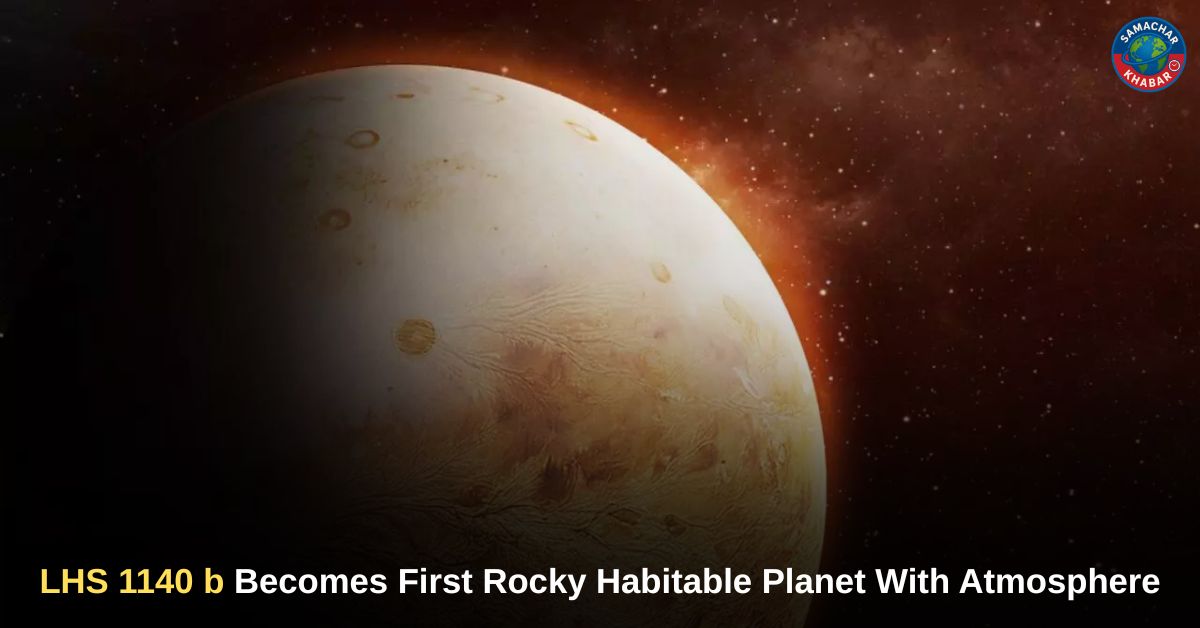
Scientists have confirmed the first atmosphere surrounding a rocky planet located in the habitable zone of a star beyond our solar system. The discovery, published in the journal Science, identifies helium in the atmosphere of LHS 1140 b, a planet about 48 light-years from Earth. While the finding is not evidence of extraterrestrial life, researchers say it represents an important step in understanding whether Earth-like worlds capable of supporting life exist elsewhere in the universe.
Key Takeaways on LHS 1140 b
- Scientists confirmed the first atmosphere on a rocky planet in the habitable zone of another star.
- The planet, LHS 1140 b, is located about 48 light-years from Earth in the constellation Cetus.
- The research was published in the journal Science by a team that includes researchers from Harvard University.
- Helium is the only gas confirmed so far, most likely in the planet’s upper atmosphere.
- Researchers have not detected oxygen or other life-supporting gases, but they have not ruled out their presence.
- Scientists emphasise that the discovery is not evidence of life, but a significant milestone in the search for potentially habitable planets.
First Atmosphere Confirmed on a Rocky Habitable-Zone Planet
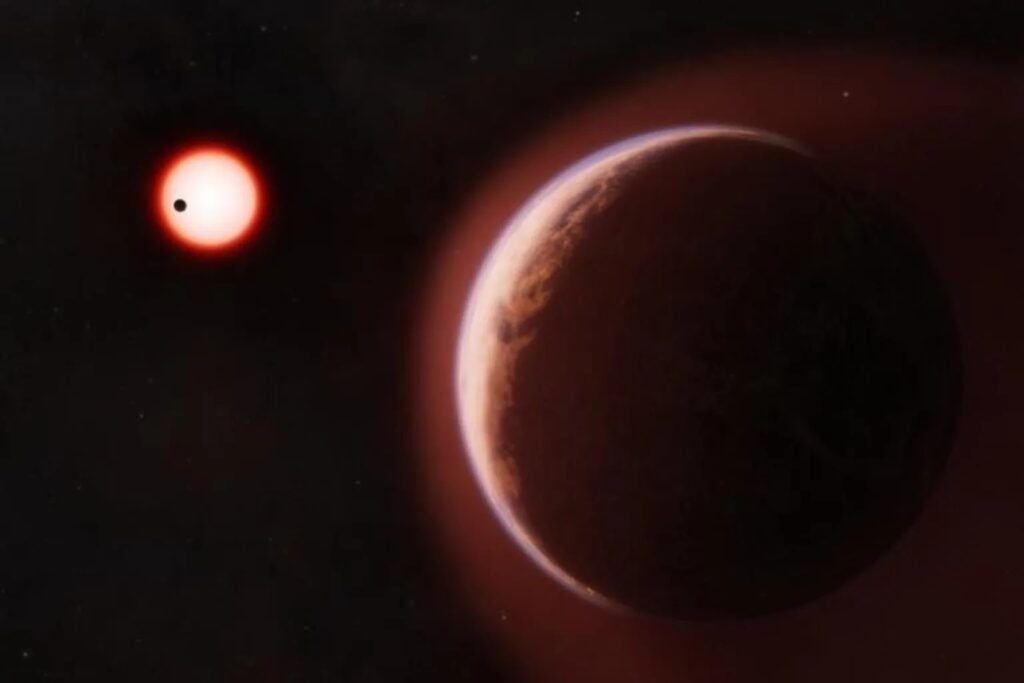
Researchers have identified the first confirmed atmosphere surrounding a rocky planet orbiting within the habitable zone of a distant star. The planet, LHS 1140 b, orbits the red dwarf star LHS 1140, which has about 18% of the Sun’s mass and is much smaller and cooler than our Sun.
Located approximately 48 light-years from Earth in the direction of the constellation Cetus, LHS 1140 b is considered one of the closest temperate, Earth-sized planets that could potentially support liquid water, making it an important target for future astronomical observations.
According to the researchers, this is the first confirmed atmosphere ever detected on a rocky planet situated within the habitable zone of another star.
Why the Discovery Matters
Astronomers have discovered more than 6,000 exoplanets orbiting distant stars. Hundreds of these planets lie within their respective stars’ habitable zones, often referred to as the “Goldilocks zone”, where temperatures are considered suitable for liquid water because they are neither too hot nor too cold.
However, only a few dozen of these worlds are rocky and similar in size to Earth. Until now, none had been confirmed to possess an atmosphere.
Scientists consider an atmosphere a crucial component when assessing whether a planet may provide conditions suitable for life. Although the current discovery does not indicate the presence of life, it demonstrates that a rocky planet within a habitable zone can retain an atmosphere.
Helium Detected, But No Evidence of Life
Researchers detected helium in the atmosphere of LHS 1140 b, most likely in its upper atmospheric layers.
Helium alone cannot support life. Scientists also clarified that current observations do not rule out the possibility that other gases may exist closer to the planet’s surface, where existing instruments have not yet been able to make direct measurements.
Importantly:
- Helium is the only confirmed atmospheric gas.
- Oxygen has not been detected.
- Scientists have not confirmed the presence of any other life-supporting gases.
The research team stressed that the discovery should not be interpreted as evidence of extraterrestrial life.
Planetary Characteristics of LHS 1140 b
The available observations indicate that LHS 1140 b is considerably larger than Earth while remaining rocky.
| Feature | LHS 1140 b |
| Distance from Earth | About 48 light-years |
| Location | Constellation Cetus |
| Host Star | LHS 1140 (Red Dwarf) |
| Star Mass | About 18% of the Sun |
| Planet Mass | About 5.6 times Earth’s |
| Planet Radius | About 1.7 times Earth’s |
| Estimated Gravity | Around 1.8–2.4 times Earth’s |
| Equilibrium Temperature | About 226 K (-47°C) |
| Confirmed Atmospheric Gas | Helium |
Scientists noted that the calculated equilibrium temperature does not include any warming effect from an atmosphere. Earth itself would also have a much colder calculated temperature without its atmosphere.
Researchers Describe the Finding as a Landmark
The findings were published in the journal Science by a research team that includes scientists from Harvard University.
Lead author Dr. Collin Cherubim described the discovery as “a big deal,” stating:
“This is the first time anyone has found an atmosphere on a rocky planet in the habitable zone of another star.”
Harvard researcher Dr. David Charbonneau said the discovery addresses one of humanity’s biggest scientific questions.
Also Read: आगरा के फ्रिज में बनी शिवलिंग जैसी बर्फ की आकृति: आस्था और वैज्ञानिक सोच के बीच चर्चा
He explained that people have long wondered whether life exists beyond Earth and that this study reveals the first confirmed atmosphere on a rocky planet located within the habitable zone of another star outside our solar system.
The researchers also clarified that they have not discovered life, but have confirmed one of the essential conditions required to continue that search.
Comparison With Other Promising Exoplanets
LHS 1140 b joins a small group of planets receiving significant scientific attention in the search for life beyond Earth.
K2-18b, a larger sub-Neptune planet believed to possibly contain a water-rich interior, previously attracted attention after scientists reported possible signs of dimethyl sulphide (DMS), a gas associated with marine life on Earth.
However, a NASA-led reanalysis in 2025 found the signal too weak to confirm and concluded that the gas can also form through non-biological processes.
Scientists also continue studying the TRAPPIST-1 planetary system.
Current observations show:
- TRAPPIST-1d does not possess an Earth-like atmosphere, based on observations from NASA’s James Webb Space Telescope.
- Data for TRAPPIST-1e remain inconclusive.
Researchers also noted that another planet in the same system, LHS 1140 c, has shown no evidence of an atmosphere, making comparisons within the system scientifically valuable.
What Scientists Will Study Next
Researchers say determining the complete atmospheric composition of distant rocky planets remains one of astronomy’s most difficult technical challenges.
Current observations confirm helium, but scientists aim to investigate whether gases such as water vapour, carbon dioxide, oxygen or others may exist in lower atmospheric layers that current instruments cannot yet detect.
Future observations, including continued studies using the James Webb Space Telescope, are expected to provide a more detailed understanding of LHS 1140 b’s atmosphere and its long-term evolution.
A Significant Step in the Search for Habitable Worlds
The confirmation of an atmosphere around LHS 1140 b represents an important advance in exoplanet science. While researchers emphasise that the discovery is not evidence of life, it demonstrates that rocky planets within habitable zones can possess atmospheres. Scientists describe the finding as a critical milestone that moves planetary research closer to understanding whether Earth-like worlds capable of supporting life exist beyond our solar system.
FAQs on LHS 1140 b
1. What is LHS 1140 b?
LHS 1140 b is a rocky exoplanet located about 48 light-years from Earth in the habitable zone of a red dwarf star.
2. What did scientists discover on LHS 1140 b?
Scientists confirmed the presence of an atmosphere and detected helium in its upper atmospheric layers.
3. Does the discovery prove life exists on LHS 1140 b?
No. Researchers clearly stated that the discovery is not evidence of extraterrestrial life.
4. Why is LHS 1140 b important?
It is the first rocky habitable-zone exoplanet with a confirmed atmosphere, marking a major milestone in planetary science.
5. Which gases have been confirmed on LHS 1140 b?
Only helium has been confirmed so far. Oxygen and other gases have not yet been detected.