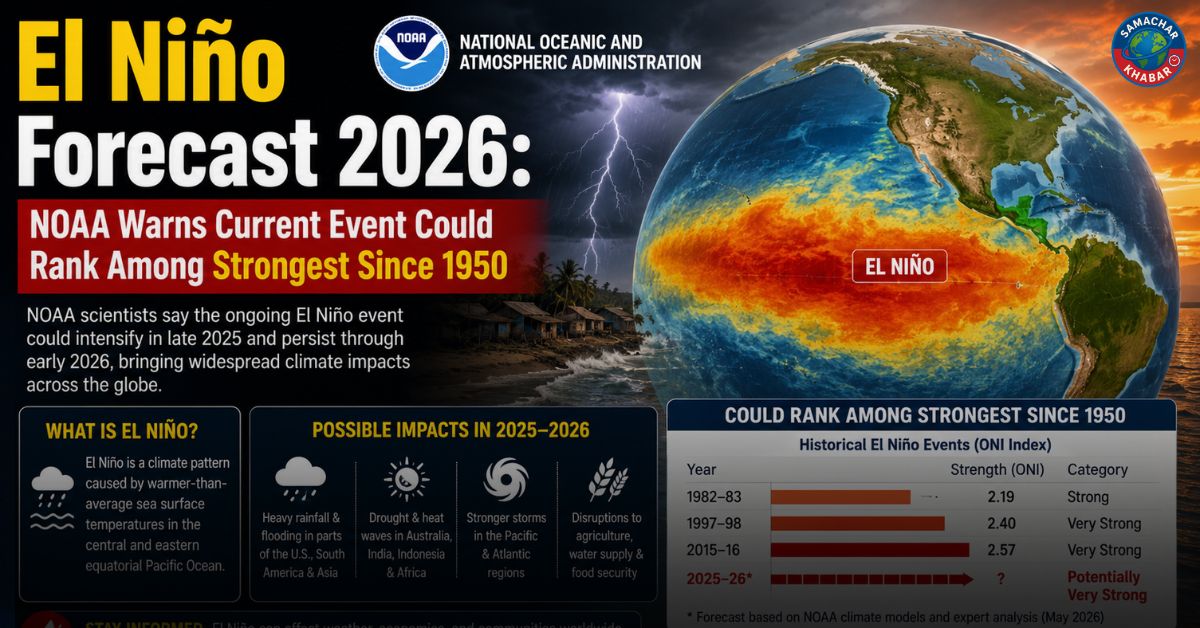
El Niño Forecast 2026: The current El Niño event is expected to strengthen significantly in the coming months and could become one of the strongest recorded since 1950, according to the latest forecast issued by the U.S. National Oceanic and Atmospheric Administration (NOAA). The agency has raised the probability of a very strong El Niño to 81% during October–December 2026 and said there is a 97% chance the climate pattern will continue into early spring 2027. Scientists say the event could influence weather patterns worldwide, including rainfall, temperatures, hurricanes, and monsoon conditions in India.
El Niño Forecast 2026: Key Takeaways
- NOAA estimates an 81% chance of a very strong El Niño by October–December 2026.
- The agency projects a 97% chance that the current El Niño will continue through early spring 2027.
- If the forecast materialises, the event could rank among the strongest El Niño episodes recorded since 1950.
- The Niño 3.4 index has crossed 1.2°C, placing the event in the moderate category, with further strengthening expected.
- Scientists say El Niño generally suppresses monsoon rainfall over India.
- The India Meteorological Department (IMD) expects below-normal rainfall during the current monsoon season.
- El Niño is also expected to influence global temperatures, hurricane activity, and extreme weather patterns.
NOAA Raises Probability of a Very Strong El Niño
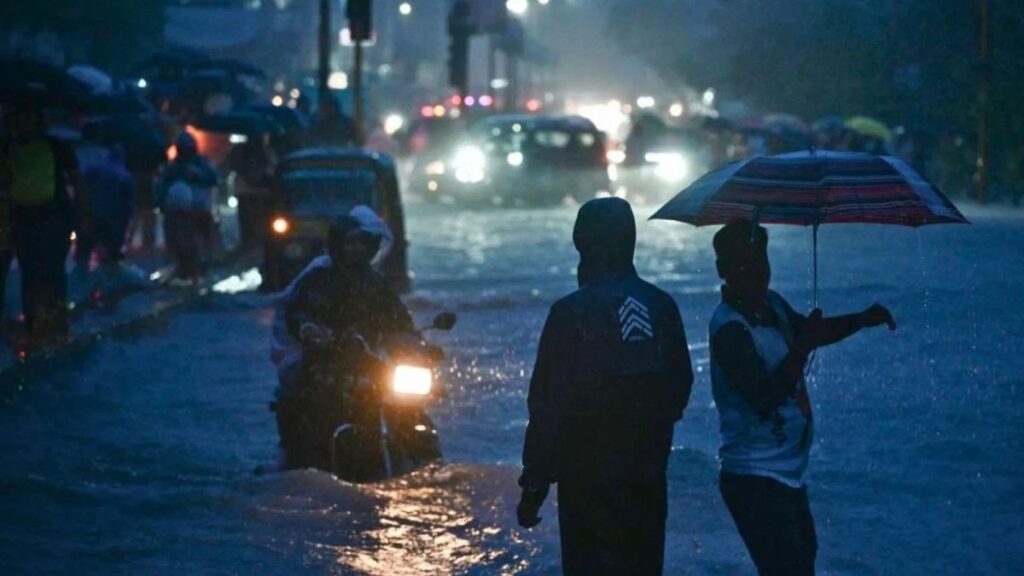
The U.S. National Oceanic and Atmospheric Administration’s Climate Prediction Center has substantially increased the probability that the ongoing El Niño will become a very strong event later this year. According to NOAA’s latest monthly bulletin, there is an 81% chance that El Niño will reach the “very strong” category during October–December 2026, placing it among the most powerful events in records dating back to 1950.
The latest outlook also indicates a 97% probability that the current El Niño will persist through early spring 2027, making it a prolonged climate event with the potential to influence weather conditions across multiple continents.
Also Read: India Monsoon 2026 Forecast: Skymet Predicts Below-Normal Rainfall Amid El Nino Concerns
Michelle L’Heureux, a physical scientist at NOAA’s Climate Prediction Center, said that only seven El Niño events over the past 75 years have been classified as very strong, indicating that the current event could become one of the strongest ever monitored.
Understanding El Niño and the ENSO Cycle
El Niño is one phase of the El Niño-Southern Oscillation (ENSO), a naturally occurring interaction between the Pacific Ocean and the atmosphere.
Also Read: US Cyclospora Outbreak: What to Know About the ‘Explosive Diarrhoea’ Parasite and Rising Cases
The phenomenon is monitored through sea surface temperatures in the Niño 3.4 region of the Pacific Ocean.
| ENSO Indicator | Description |
| El Niño threshold | Temperature anomaly above 0.5°C |
| Current Niño 3.4 Index | Above 1.2°C |
| Strong El Niño | Above 1.5°C |
| Very Strong El Niño | Above 2.0°C |
Although the Niño 3.4 index currently remains in the moderate category, NOAA expects further strengthening during the coming months.
Scientists Explain the Rapid Intensification
Climate scientist Roxy Mathew Koll of the Indian Institute of Tropical Meteorology said the current El Niño has strengthened rapidly since April and May.
According to Koll, rising subsurface ocean temperatures in the eastern Pacific, combined with weakened trade winds and the background effect of global ocean warming, are reinforcing the El Niño state through ocean-atmosphere feedback.
He also noted that a strong El Niño developing in an already warmer global climate could push global temperatures even higher, making 2027 one of the hottest years on record while increasing the likelihood of extreme weather in several regions.
What the Forecast Means for India
El Niño typically suppresses rainfall over the Indian region and has historically been associated with below-normal monsoon seasons.
According to IMD Director General Mrutyunjay Mohapatra, around 60% of El Niño years have recorded below-normal or deficient seasonal rainfall in India, while the remaining 40% have experienced normal monsoon rainfall.
IMD has forecast slightly below-normal rainfall across the country until July 22.
The department also said the monsoon trough is expected to shift towards the Himalayan foothills, reducing rainfall over western India during the period.
Normal rainfall is expected mainly over:
- Rajasthan
- Telangana
- Andhra Pradesh
- Maharashtra
- North Interior Karnataka
Earlier this month, IMD projected countrywide monsoon rainfall below 94% of the long-period average following a rainfall deficiency of around 40% during June.
Possible Global Weather Impacts
NOAA says stronger El Niño events can significantly alter weather patterns across the globe.
Expected impacts include:
- Higher global temperatures.
- Increased risk of heatwaves.
- Drought conditions in several regions.
- Flooding in some parts of the world.
- Changes in rainfall distribution.
Scientists also note that warm oceans can continue supplying additional moisture, allowing some regions to experience short periods of extremely heavy rainfall despite an overall reduction in seasonal rainfall.
Influence on the Atlantic Hurricane Season
One of the major impacts of a strong El Niño is the suppression of Atlantic hurricane activity.
NOAA says stronger upper-level winds associated with El Niño generally reduce hurricane and tropical storm development across the Atlantic Basin while favouring tropical development over parts of the eastern and central Pacific.
The 2026 Atlantic hurricane season officially began on June 1. So far, only Tropical Storm Arthur has formed.
Hurricane forecasters have reduced the expected number of named Atlantic storms to nine, compared with the long-term average of fourteen.
Ken Graham, Director of NOAA’s National Weather Service, said every El Niño is unique and each event produces its own weather pattern.
Winter Weather and Ocean Changes in the United States
According to NOAA, El Niño generally reaches peak strength during the Northern Hemisphere winter.
Typical impacts include:
- Stormier weather across the southern United States.
- Increased chances of rain and snowfall in southern states.
- Drier conditions over the northern Rockies and the Ohio and Tennessee valleys.
- Warmer-than-normal winter temperatures across the northern United States.
- Greater risk of high-tide flooding along parts of the U.S. West Coast.
- Changes in fish migration, with warm-water species moving north and cold-water species shifting farther north or into deeper waters.
- Increased occurrence of harmful algal blooms along the U.S. West Coast during past El Niño episodes.
Historical Perspective on Major El Niño Events
The strongest recent El Niño occurred during 2015–2016 and was widely known as “Godzilla.” The event lasted for nearly two years and saw the Niño 3.4 index remain above 2°C for more than four months.
Other very strong El Niño episodes occurred during:
- 1982–83
- 1991–92
- 1997–98
In India, both 2014 and 2015 ranked among the four driest years of this century, with seasonal monsoon rainfall remaining below 90% of normal.
Outlook for the Months Ahead
The latest forecasts from NOAA and assessments by climate scientists indicate that the current El Niño is likely to strengthen further during the second half of 2026. With projections pointing to continued persistence into early 2027, meteorological agencies will closely monitor its evolution because of its potential influence on global temperatures, rainfall distribution, tropical cyclone activity, and monsoon performance across different regions, including India.
Weather Preparedness and Spiritual Wisdom
As changing climate patterns continue to influence lives and livelihoods across the world, preparedness, responsible decision-making, and awareness remain essential.
Tatvadarshi Sant Rampal Ji Maharaj teaches that true spiritual Knowledge inspires people to live with discipline, compassion, and harmony with nature while facing life’s changing circumstances with patience and wisdom. Such values encourage individuals to remain responsible and resilient during challenging times.
For more information visit our:
Website: www.jagatgururampalji.org
YouTube: Sant Rampal Ji Maharaj
Facebook: Spiritual Leader Saint Rampal Ji
X (Twitter): @SaintRampalJiM
FAQs on El Niño Forecast 2026
1. What is El Niño?
El Niño is the warm phase of the ENSO climate cycle caused by above-normal Pacific Ocean sea surface temperatures.
2. How likely is a very strong El Niño in 2026?
NOAA estimates an 81% chance of a very strong El Niño during October–December 2026.
3. How long is the current El Niño expected to last?
NOAA projects a 97% chance that it will continue through early spring 2027.
4. How can El Niño affect India?
It generally suppresses monsoon rainfall and may contribute to below-normal seasonal rainfall.
5. Why is this El Niño significant?
Scientists say it could rank among the strongest El Niño events recorded since 1950 if forecast conditions continue.