The gears of the world’s largest democracy are turning once again at the grass-roots level in the national capital. The Delhi Chief Electoral Office, under the aegis of the Election Commission of India (ECI), has officially rolled out its massive Special Intensive Revision (SIR) program across all 70 Assembly constituencies. This monumental exercise aims to meticulously clean up, verify, and update the city’s voter lists, ensuring that no eligible citizen is left behind and no duplicate entries remain.
As outlined in the public announcement shared by media outlets like the Hindustan Times in the file named “96363.jpg”, Booth-Level Officers (BLOs) have begun to hit the ground for a month-long, door-to-door verification drive. For ordinary citizens, this is the most critical window to ensure their democratic right remains secure before the next electoral cycle.
Key Points Of Delhi’s SIR
- Massive Deployment: Over 13,000 specially trained Booth-Level Officers (BLOs) are actively visiting households across Delhi.
- Multiple Visits: To ensure thoroughness, BLOs are scheduled to make at least three distinct visits to each household if families are initially unavailable.
- The On-Ground Window: The door-to-door enumeration phase commenced on June 30 and will run continuously until July 29, 2026.
- Digital Alternative: While the physical drive is active, citizens also have the option to complete the entire verification process online via the official ECI portal.
- Final Roll Publication: Following the resolution of public claims and disputes, the absolute final electoral roll will be officially published on October 7, 2026.
The Three-Step Verification Process
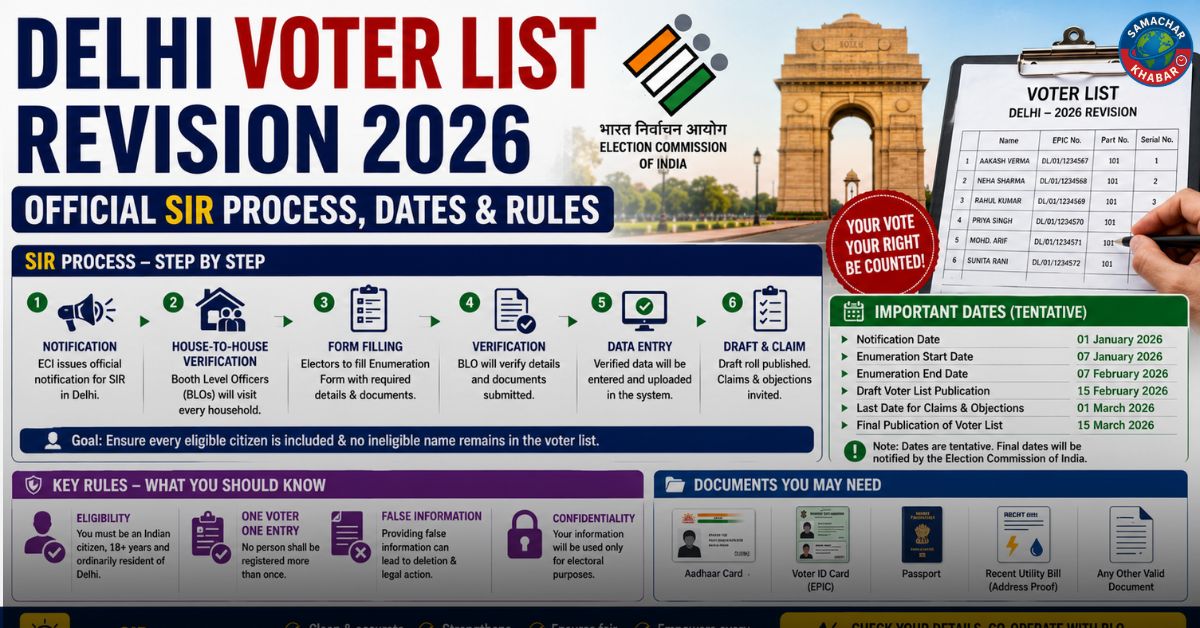
The administrative framework for the Special Intensive Revision has been designed to be as straightforward as possible to maximize public compliance. As detailed in the public infographic “96361.jpg”, the process operates in three distinct stages:
- Distribution: A designated BLO visits your residence to hand over pre-printed enumeration forms containing existing voter details.
- Collection: Electors review the details, fill out any missing information, correct errors, or add new eligible family members (such as young adults who have turned 18). The BLO then collects the completed forms during a subsequent visit.
- Acknowledgement: Upon receiving the filled form, the BLO provides an official acknowledgement receipt on a copy of the form. Citizens are strongly advised to retain this receipt for their personal records to track their application status.
For tech-savvy residents or working professionals who find it difficult to coordinate with physical visits, the ECI provides a seamless digital alternative. Voters can log directly onto voters.eci.gov.in to check their status, submit corrections, or file new registrations online.
A Balanced Look at Timelines and Ground Realities
From an administrative standpoint, the timeline of this intensive drive is highly structured to prevent any last-minute bottlenecks before future elections. Following the conclusion of the door-to-door phase on July 29, the poll body will focus on the rationalization of polling stations. A draft electoral roll will be published on August 5, opening a month-long window until September 4 for citizens to file claims and objections. The authority has until October 3 to legally dispose of these objections before publishing the final list on October 7.
However, executing an exercise of this scale in a hyper-urban hub like Delhi presents a unique set of challenges. While the deployment of 13,000 personnel is a major positive step toward transparency, residents in high-rise apartments and gated communities often report logistical friction regarding security access for BLOs. Furthermore, with many working professionals away during typical daytime visiting hours, the mandate for BLOs to make at least three separate visits is a crucial safeguard against accidental voter deletion.
Ultimately, maintaining a pristine voter roll is a shared civic duty. While the state provides the infrastructure, the ultimate success of the Special Intensive Revision depends on citizens checking their details whether on their doorstep or via their smartphones.
FAQs Related To Delhi’s SIR
1. What is the Special Intensive Revision (SIR) currently happening in Delhi?
SIR is a dedicated, comprehensive exercise conducted by the Delhi Chief Electoral Office to clean, update, and verify the city’s electoral rolls. It involves physical door-to-door verification to eliminate duplicates and add new eligible voters.
2. What should I do when a Booth-Level Officer (BLO) visits my house?
The BLO will provide a pre-printed enumeration form. You must check the details, make corrections if necessary, and return it during their subsequent visit. Ensure you collect your official acknowledgement receipt from the officer.
3. What if I am not at home when the BLO visits?
To prevent citizens from being left out, the guidelines mandate that BLOs must make at least three separate attempts to visit a household if the residents are initially unavailable.
4. Can I complete this voter verification process online?
Yes. If you prefer a digital option or miss the physical visits, you can seamlessly review your voter details, file corrections, or register as a new voter directly through the official Election Commission portal at voters.eci.gov.in.
5. What are the key deadlines for the Delhi voter list revision?
The house-to-house enumeration runs from June 30 to July 29. The draft electoral roll will be published on August 5, allowing claims and objections until September 4. The absolute final electoral roll is scheduled for publication on October 7, 2026.